

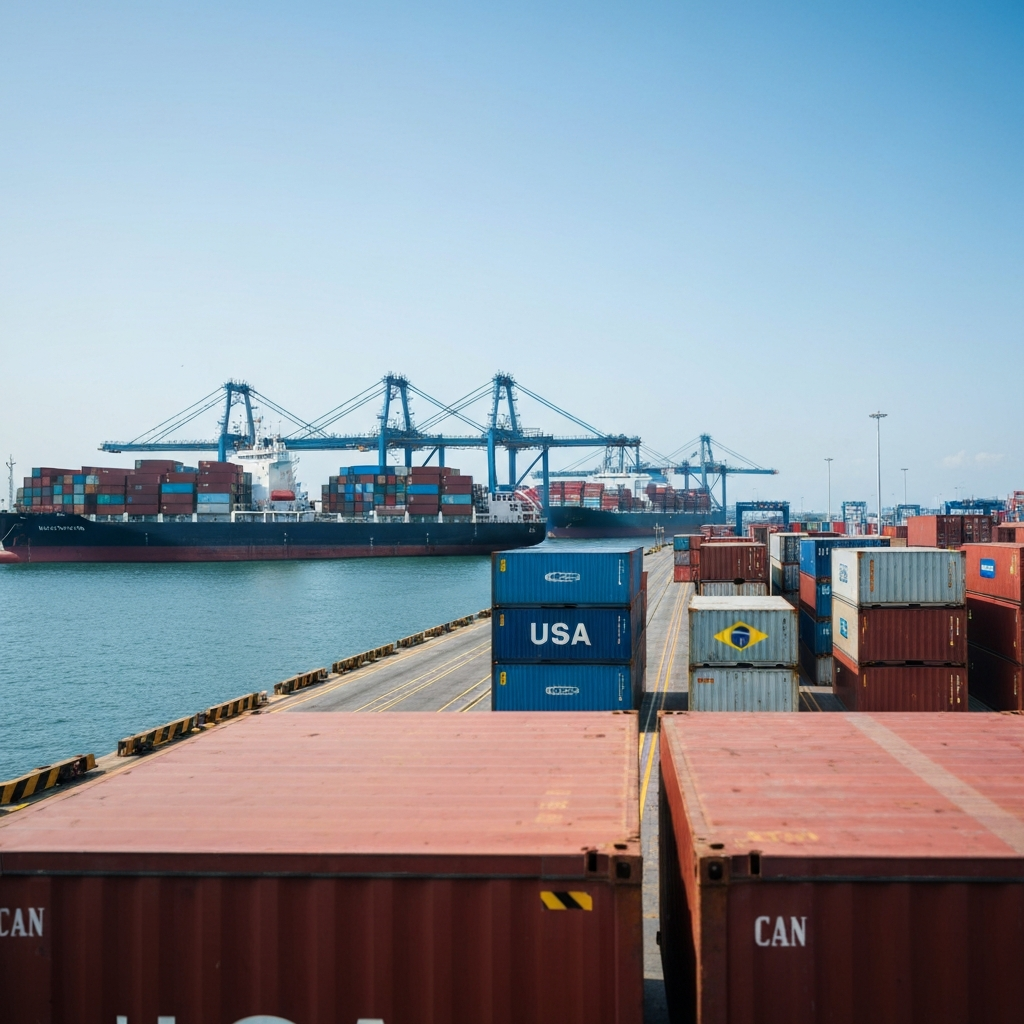
The trade relationship between the United States and Brazil has long been a cornerstone of both nations’ economies. However, recent developments have introduced new dynamics that are reshaping this partnership.
Historical Context
Historically, the U.S. and Brazil have maintained robust economic ties. In 2024, the total goods and services trade between the two countries was estimated at $127.6 billion, marking a 12.2% increase from the previous year. This included U.S. goods exports to Brazil totaling $49.1 billion and imports from Brazil amounting to $42.3 billion. The U.S. also enjoyed a services trade surplus of $23.1 billion with Brazil in 2024.
Recent Developments
In April 2025, the U.S. administration imposed a 10% tariff on Brazilian imports, followed by an additional 40% tariff in July 2025. These measures significantly impacted trade flows, leading to a notable decline in U.S. imports of Brazilian products such as coffee, orange juice, and meats.
In response, Brazil sought to diversify its export markets, with China increasing its share of Brazilian exports by 5.2% in October 2025 compared to the previous year.
Current Status and Future Prospects
As of early 2026, the U.S. Supreme Court terminated certain tariffs imposed under the International Emergency Economic Powers Act, reducing the effective tariff on Brazilian products from 50% to 10%. This legal development has opened avenues for renegotiation and potential stabilization of trade relations.
Private sector leaders from both countries have emphasized the importance of reducing trade friction and expanding collaboration across key sectors to foster a more stable and growth-oriented partnership.
In conclusion, while recent challenges have tested the resilience of U.S.-Brazil trade relations, ongoing dialogues and policy adjustments offer a pathway toward renewed cooperation and mutual economic benefit.